Which vantage points give you the cleanest skyline? When is golden hour? Here is a practical, shot-by-shot guide for photographers of all levels.
Victoria Harbour is one of the most photographed urban waterfronts on Earth. And yet the same shots circulate endlessly — the ICC tower from Wan Chai, the HK Island skyline from Tsim Sha Tsui promenade. Here, we go deeper: shooting from, around, and through Kowloon Public Pier to find angles most photographers miss.
The Four Vantage Points
1. The Pier Deck (Ground Level, Most Accessible)
What you get: A true water-level perspective on the Hong Kong Island skyline. No crowds, no railing interference if you shoot from the open sides. The pier's wooden deck creates a natural leading line toward the harbour.
Best for: Wide-angle architectural shots, long exposures of Star Ferry crossings, reflections in calm water.
Gear: 16–35mm. Tripod essential for evening work. Graduated ND filter recommended at sunrise to balance bright sky with darker water.
Best times:
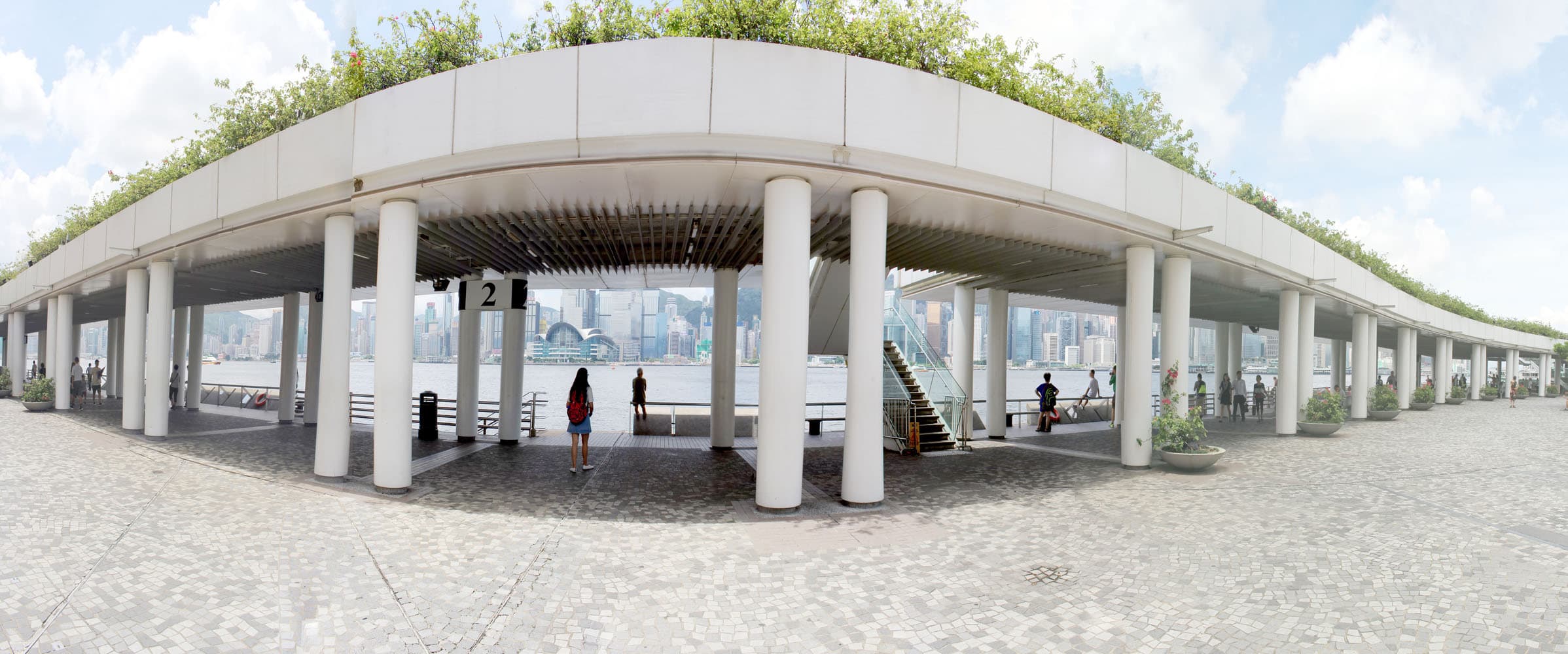
2. The Pavilion Roof Vantage (Slightly Elevated)
The covered pavilion structure offers a vantage point roughly 4–5 metres above deck level. This elevation removes most of the ferry traffic from the foreground and compresses the skyline, making the skyscraper cluster appear more dense and dramatic.
Best for: Telephoto skyline compression (85–200mm), removing water-level foreground clutter, emphasising the density of the Central / Admiralty financial district.
Permit note: There are no special permits required for photography from public pier areas, though commercial shoots may require LCSD approval.
3. The Waterfront Promenade (Lateral Movement)
Walking east from the pier toward the Avenue of Stars gives increasingly angled views of Hong Kong Island. The diagonal relationship between pier and island creates dynamic triangular compositions.
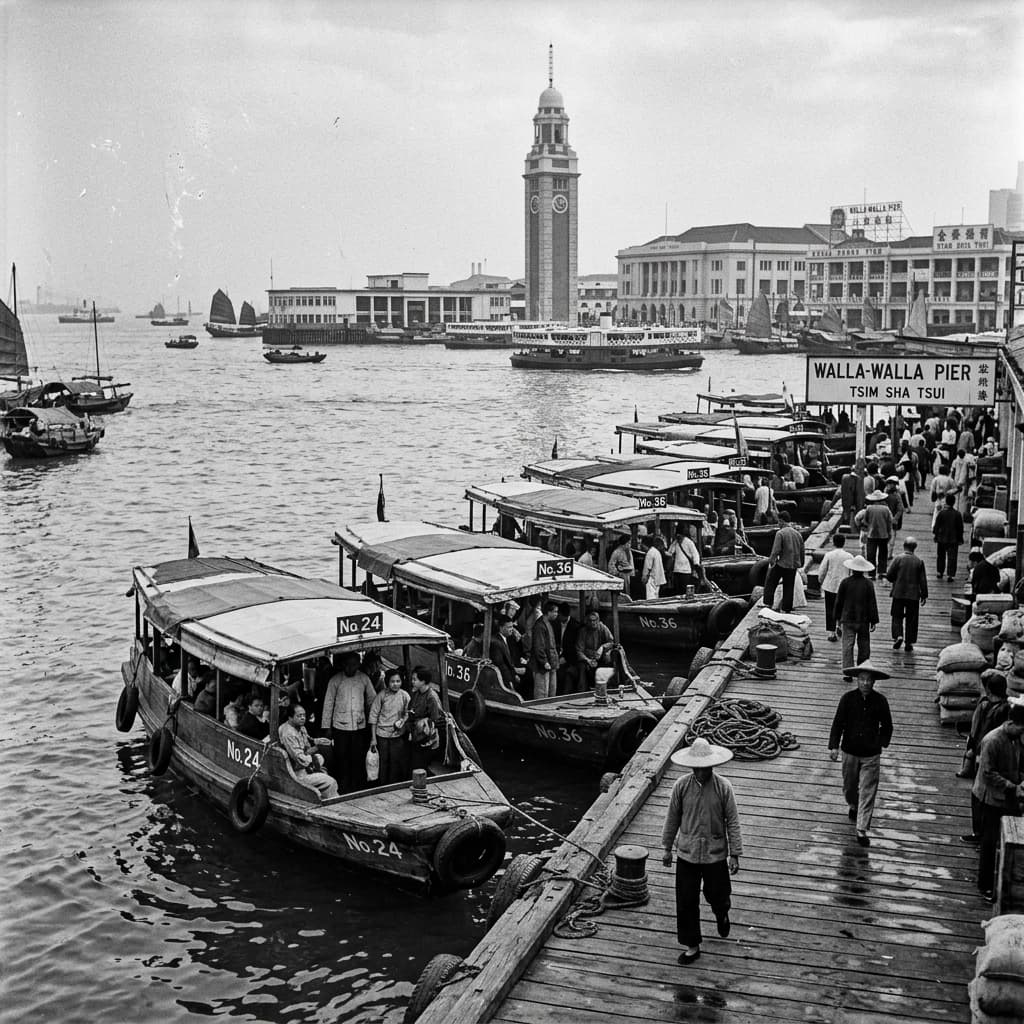
Best for: Including ferry wakes as motion blur, Walla-Walla boats as foreground scale objects, Hong Kong flag at the pier entrance as a cultural anchor.
4. From Water: Walla-Walla Perspective
Hiring a Walla-Walla for a 30-minute circuit gives you the platform no land permit can — water-level shooting with 360° composition freedom and the unique quality of motion in every frame.
Best for: Shooting back at Kowloon (the less-photographed view), placing vessels in context of both shorelines simultaneously, capturing the harbour's astonishing width.
Night Photography: The Symphony Window
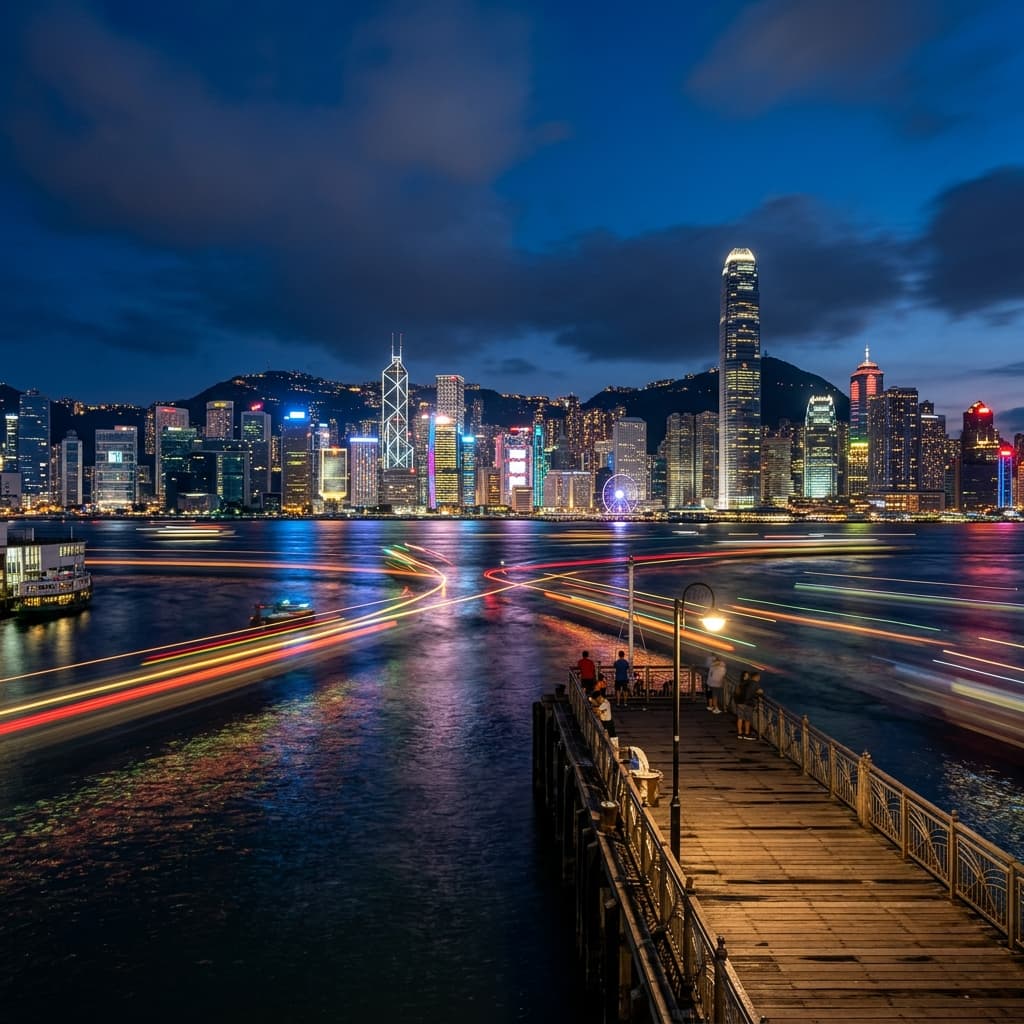
The Symphony of Lights runs every night at 20:00 (Mon–Sat). Buildings across Wan Chai, Central, Admiralty, and Sheung Wan simultaneously activate their LED facades, creating a coordinated light show visible from both sides of the harbour.
Settings: ISO 400–800, f/8, 10–25 second exposure to capture building light trails without overexposing the sky. Bracket exposures for HDR merging.
Compose early: Arrive at your tripod position by 19:45. The best spots fill up. The pier's eastern edge provides a right-to-left composition with the Bank of China Tower (IM Pei's glass prism) anchoring the right frame.
The Hidden Shot: Typhoon Shelter at Dawn
Walk 700 metres northeast of the pier to the Yau Ma Tei Typhoon Shelter before 07:00 and you will find fishing junks, Walla-Wallas, and drying laundry against a Hong Kong skyline backdrop in morning mist. This is the most atmospheric harbour shot in Kowloon and appears in almost no travel photography databases.
Gear Checklist for Harbour Photography
Respectful Photography
The pier is an active public transport facility. Fishermen use the landing steps daily. Walla-Walla operators are working professionals. Do not block gangways with tripods during peak boarding periods (07:30–09:00, 17:30–19:00), and always ask before photographing individual workers or passengers.