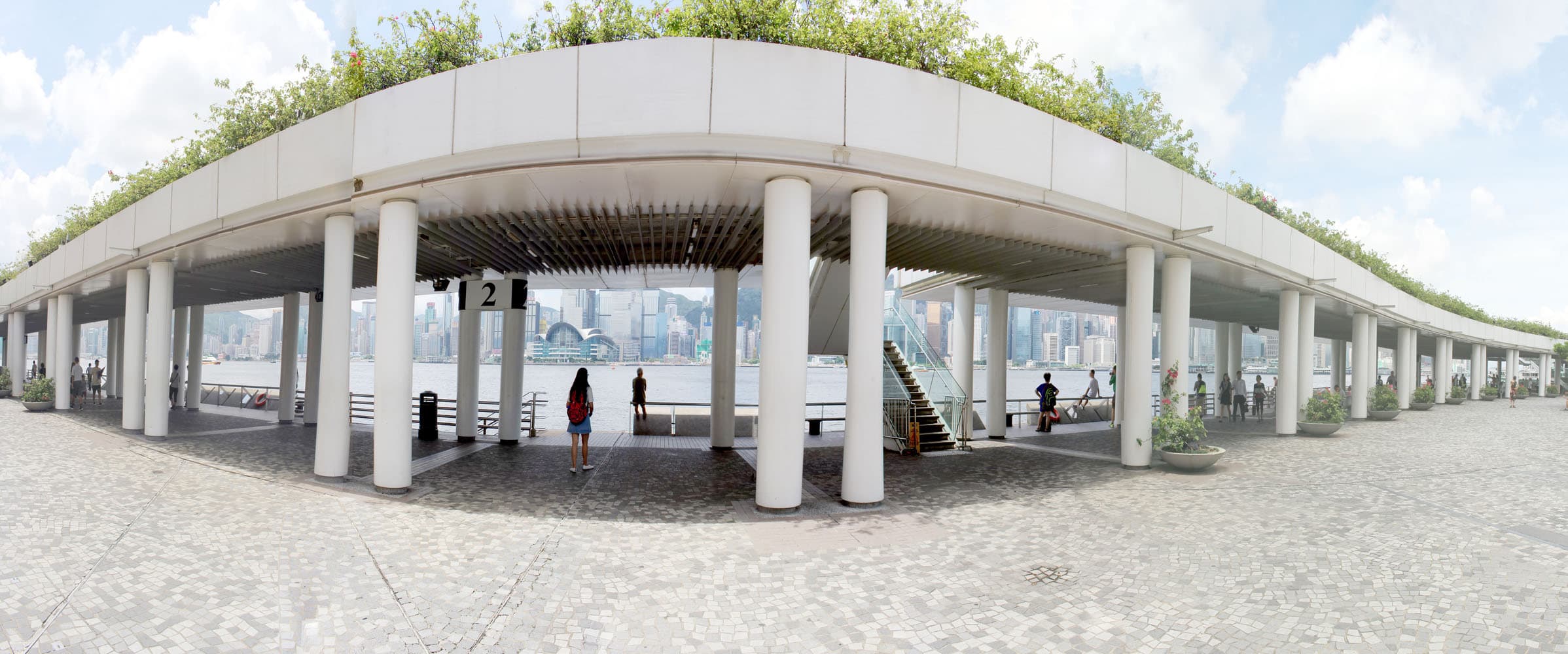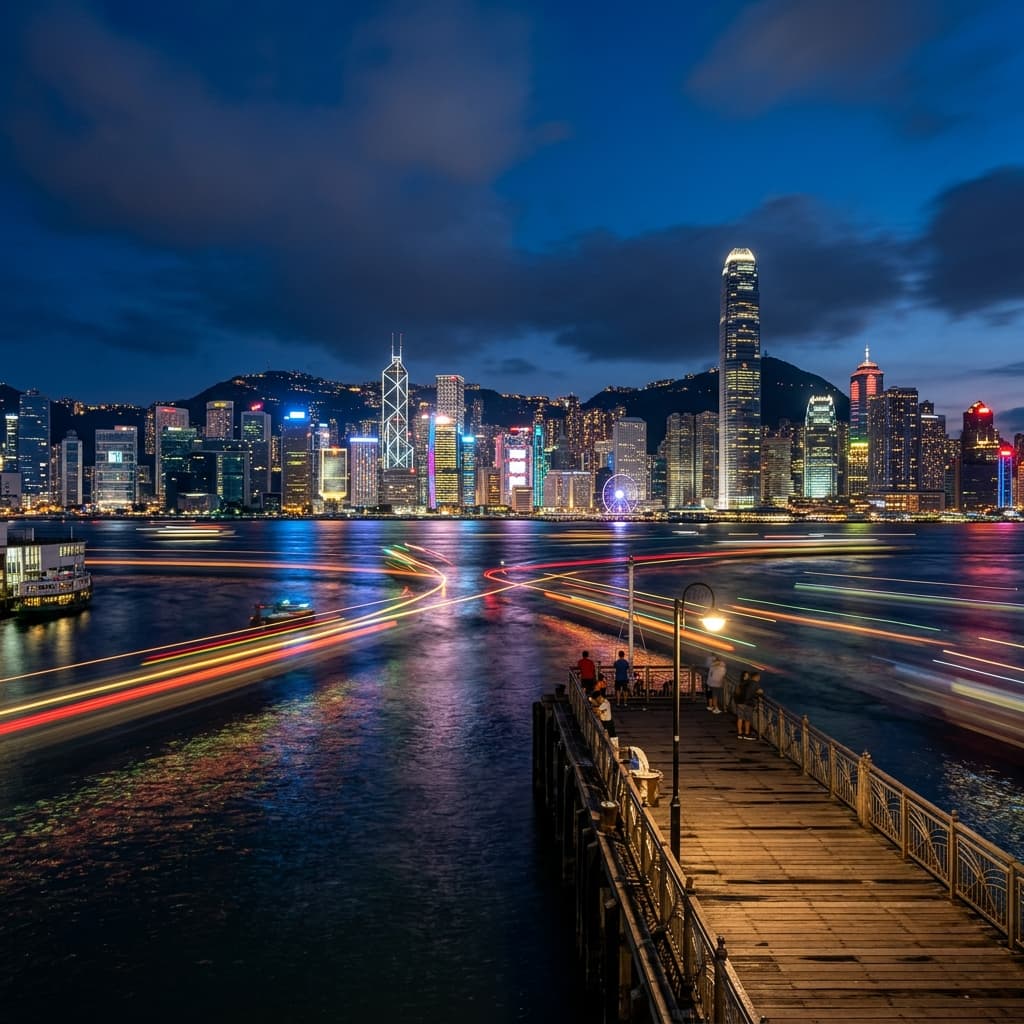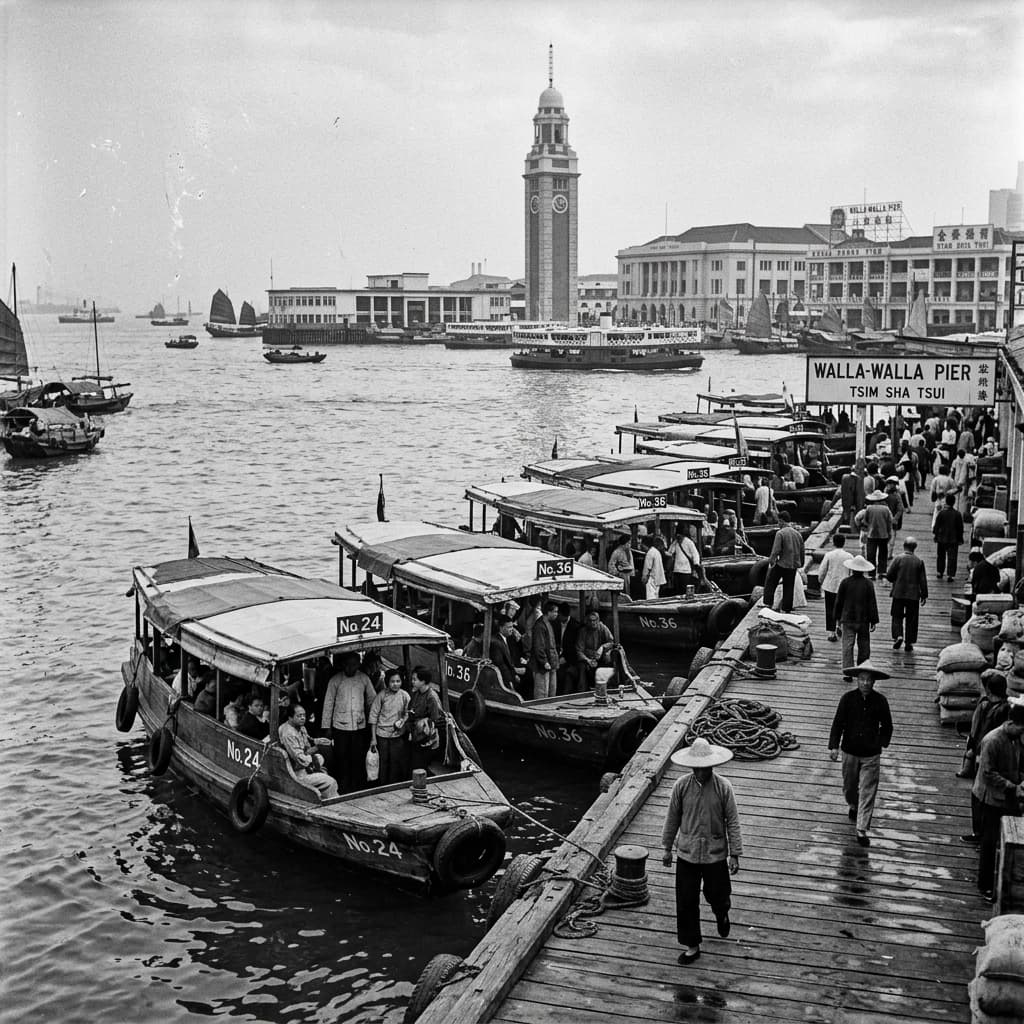
From colonial landing steps in 1907 to a Grade I historic monument today, the pier has witnessed Hong Kong's most transformative moments.
Kowloon Public Pier has stood at the northern edge of Victoria Harbour for well over a century, a quiet sentinel absorbing the noise of empire, commerce, and daily life in equal measure.
Origins: 1907 Colonial Landing Steps
When the British colonial administration commissioned the original landing steps in 1907, the goal was purely functional — efficient movement of passengers and cargo between Kowloon and Hong Kong Island. The harbour was the motorway of its age; a vessel crossing to Central docking at the stone steps was as ordinary as stepping onto a bus today.
The earliest photographs show a modest timber-and-stone structure without ceremony or grandeur, flanked by godowns and coolie labour. Yet even then, the pier's strategic position at the tip of Kowloon Peninsula made it one of the most observed patches of waterfront in the entire colony.
The 1930s Rebuild and the Ferry Era
By the 1930s, the original structure was replaced with a more permanent form — the reinforced Art-Deco influenced concrete pavilion whose spirit lives on in the current building. This was the golden era of the cross-harbour ferry before the MTR existed, before the Cross-Harbour Tunnel, before any fixed link. Every doctor appointment in Central, every night out in Wanchai, every trip to school in the New Territories began with a ferry.
Kowloon Public Pier was the point of departure and return. Families gathered here. Fishermen moored alongside. Street traders hawked newspapers, fruit, and egg tarts.
Wartime: 1941–1945
The Japanese occupation of Hong Kong transformed the pier's purpose overnight. British administration collapsed, Japanese command took control of all maritime passages, and the pier became a checkpoint as much as a crossing point. The Harbour was surveilled, movement restricted.
After liberation in August 1945, the pier returned to civilian rhythm, and the decades that followed saw Kowloon explode in population and density as refugees, migrants, and returning families flooded across the border from mainland China.
The 1965 Reconstruction
The pier's most significant physical overhaul came in 1965, when the colonial government rebuilt it to accommodate the growth of the Walla-Walla trade — the small motorised sampan-style boats that operated as water taxis throughout the harbour. Covered shelters, ticketing booths, and proper berthing apparatus gave the pier its mature, functional form.
Handover: 1997 and the New SAR Era
When sovereignty transferred to China on July 1, 1997, the fireworks over Victoria Harbour reflected in the pier's harbour-face. The pier had seen colonisers arrive and depart. It would now watch a new chapter unfold, though its service to the public remained unchanged.
Listing as a Grade I Historic Building
In 2009, the Antiquities Advisory Board formally listed Kowloon Public Pier as a Grade I Historic Building — the highest tier of recognition in Hong Kong's heritage classification system, reserved for buildings of outstanding historical significance. This legally protected the pier from demolition and acknowledged what generations of Hongkongers had instinctively understood: the pier was irreplaceable.
Today, it remains one of the few surviving colonial-era maritime structures in the waterfront of Kowloon, a rare physical thread connecting the present city to its layered past.