Harbour Sentinel
Chronology: 1907 – Present
Maritime Sentinel Established
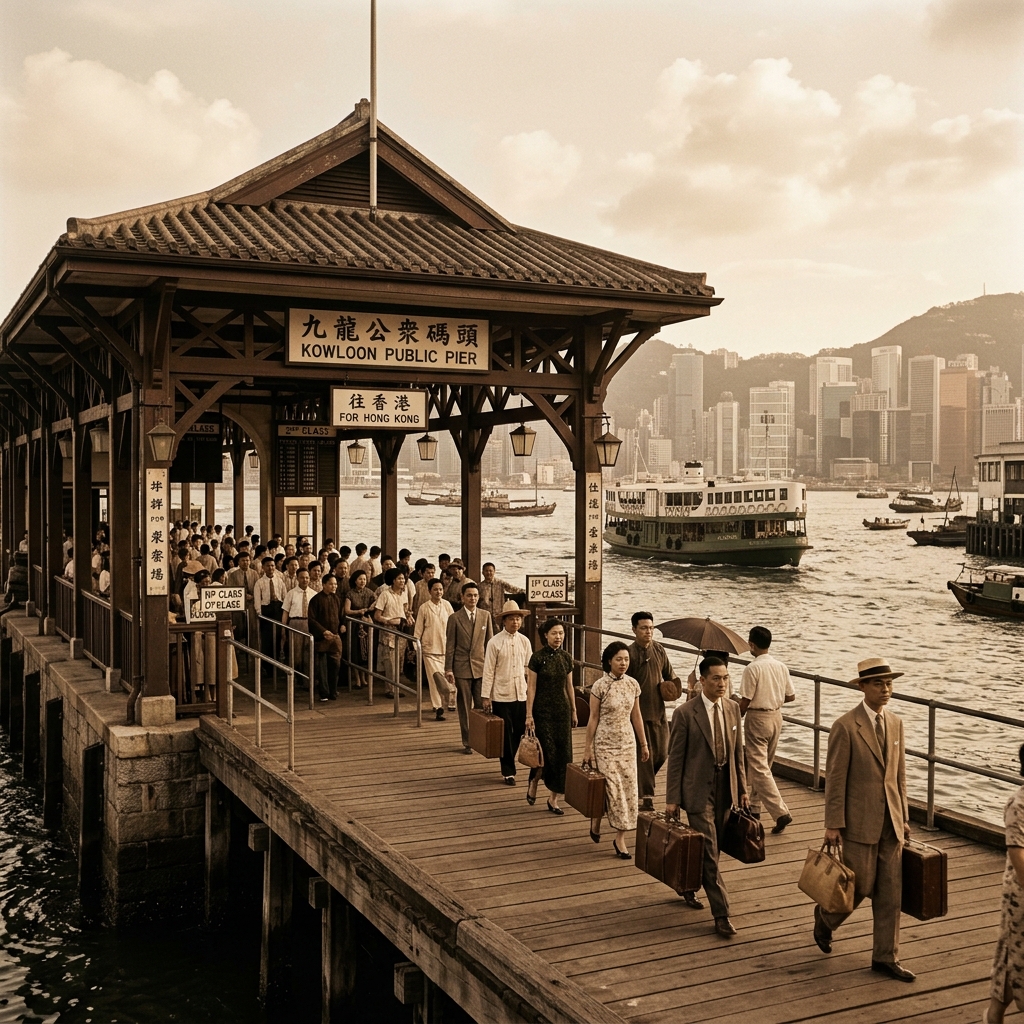
The original Kowloon Public Pier opens adjacent to Salisbury Road, serving as a primary gateway for Tsim Sha Tsui's maritime traffic and connecting passengers to the rail terminal.
Tokyo Olympics Torch Relay
A historic moment as the Olympic Flame arrives at the pier, marking Hong Kong's inclusion in the global sporting legacy for the Tokyo Games.
The Pre-Tunnel Era
Before the Cross-Harbour Tunnel opened, the pier was a critical interchange where 'Walla-Wallas' (water taxis) shuttled residents between Hong Kong Island and the TST Rail Station.
Modern Reconstruction
The pier reopened after a major reconstruction, expanding to the current 6-berth facility (Landing Steps 1–6) we see today, optimized for modern tourism and private vessels.
Beijing Olympics Homecoming
The pier once again hosts the Olympic Flame for the Beijing 2008 Torch Relay, solidifying its place as Hong Kong's 'Harbour Sentinel'.
Structural Evolution
Trace the physical iterations of the pier through history.
1907 – 1914
A modest wooden and iron landing facility established to handle the newly formed Tsim Sha Tsui rail-link traffic.
Structure was primitive, focusing on functionality for the Kowloon-Canton Railway ferry transfers.
1914 – 1941
Expanded into a more robust concrete-supported structure to manage the exponential growth of maritime freight.
Included enhanced landing steps to accommodate larger British naval vessels and commercial steamers.
1953 – 2003
The iconic 'Traditional' pier structure. A multi-step concrete landmark designed for high-frequency public usage.
This structure became a cinematic legend, appearing in countless 20th-century Hong Kong and international films.
2004 – Present
Structure KP070. The current modern facility featuring 6 berths and advanced safety infrastructure.
Optimized for both historic Walla-Walla services and modern luxury harbour cruises.
"A pier is not just a landing; it is the silent observer of a city's evolution, connecting the restless water to the steady stone."
Harbour Authority Archive